United Nations’ World Meteorological Organization (WMO) Alert on El Niño
United Nations’ World Meteorological Organization (WMO) Alert on June 2, 2026
The United Nations’ World Meteorological Organization (WMO) has issued an urgent global warning: El Niño is developing fast, and its impacts extreme heat, floods, droughts, and food insecurity are set to intensify in the months ahead. Here are the key facts every citizen and policymaker needs to know
Understanding El Niño
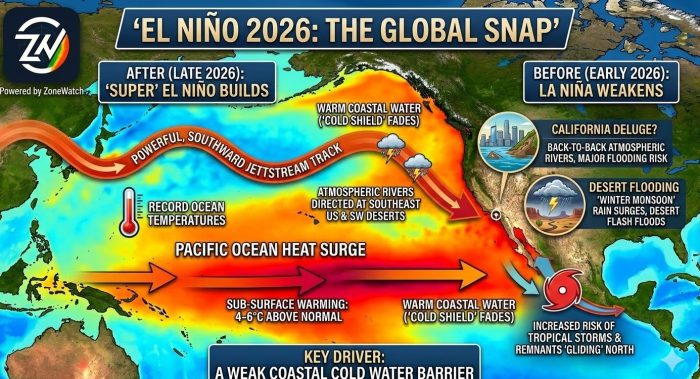
El Niño is a naturally occurring climate phenomenon triggered when tropical trade winds weaken, allowing warm water in the western Pacific to shift eastward. This suppresses cold-water upwelling in the eastern Pacific, warming sea-surface temperatures and disrupting global weather patterns.
- Occurs every 2–7 years
- Typically lasts 9–12 months
- Drives worldwide changes in wind, pressure, and rainfall patterns
The WMO’s Stochastical Metrics
| Metric | Finding |
| Probability of El Niño (June–August 2026) | 80% |
| Probability of El Niño continuing to November | ≥ 90% |
| Projected intensity | At least moderate possibly strong |
| Sub-surface ocean temperature anomaly | More than 6°C above average |
| 2024 global temperature above pre-industrial levels | ~1.55°C (hottest year on record) |
| Next record year predicted | 2027 |
Where Will El Niño Strike Hardest?
There will be Increased Rainfall & Flooding in the following regions
- Southern South America
- Southern United States
- Horn of Africa
- Central Asia
There is a projected Drought Risks in:
- Australia
- Central America
- Indonesia
- Parts of South Asia
Key messages
Time for informed decision-making, planning and preparedness is now
Warm ocean waters are fueling the development of El Niño
El Niño typically increases global temperatures and drives more extreme weather and rainfall patterns
Above average temperatures forecast nearly everywhere for June to August
Advanced forecasts help in preparations to protect lives and livelihoods
key Facts
- Above-average temperatures nearly everywhere on Earth
- Increased hurricane formation in the central and eastern Pacific
- Heightened ocean heatwaves threatening marine ecosystems
The Climate Change Implication
While climate change does not increase how often El Niño occurs, it significantly amplifies the damage. A warmer ocean and atmosphere provide more energy and moisture, making extreme weather events heatwaves, flooding, and wildfires far more intense.
- The 2023–2024 El Niño was one of the five strongest ever recorded
- It contributed to 2024 becoming the hottest year in recorded history at 1.55°C above pre-industrial levels
- 2027 is already forecast to break that record
Global Reactions
“El Nino is arriving on our doorstep. The world must treat it as the urgent climate warning it is. El Nino conditions will pour fuel on the fire of a warming world.”
António Guterres, UN Secretary-General
“We need to prepare for a potentially strong El Nino event which will exacerbate drought and heavy rainfall and increase the risk of heatwaves both on land and in the ocean.” Celeste Saulo, WMO Secretary-General
What Needs to Be Done
The UN and WMO are urging governments and communities to take immediate action:
- Strengthen early warning systems in all vulnerable nations
- Accelerate the transition from fossil fuels to renewable energy
- Protect the most vulnerable communities from extreme weather
- Invest in disaster preparedness and climate-resilient infrastructure
- Address food and water security risks now, before conditions worsen
ReadMore@ https://wmo.int/news/media-centre/wmo-prepare-el-nino


